Early childhood is a foundational period that shapes a child’s cognitive abilities, emotional resilience, social skills, and overall approach to learning. During these formative years, young minds develop at an extraordinary pace, forming millions of neural connections every second. Providing children with rich, stimulating environments and structured educational opportunities lays the groundwork for academic success and lifelong personal growth. Enrichment activities, specialized instructional methods, and dedicated care environments work together to foster curiosity, build critical thinking, and instill a love for discovery that persists well into adulthood and through every stage of education.
Beyond initial milestone development, the physical and emotional settings in which children learn play a decisive role in their willingness to take intellectual risks. When children feel secure, supported, and appropriately challenged, their natural drive to explore expands exponentially. Parents and educators who collaborate effectively can construct a continuous learning ecosystem that addresses physical health, social-emotional well-being, and cognitive development simultaneously, setting a strong trajectory for future achievement.
Nurturing Curiosity and Foundational Skills in Early Childhood
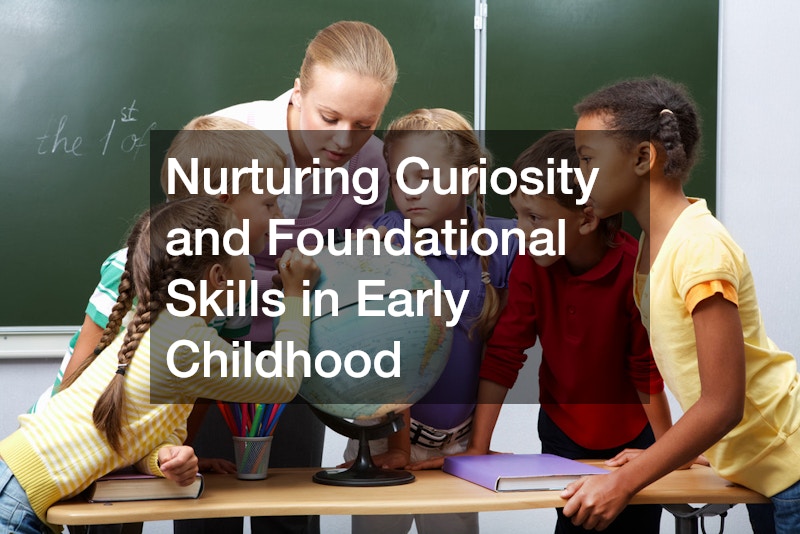
The earliest years of development serve as the ultimate springboard for future intellectual and social growth. When toddlers and young children are introduced to environments designed specifically for exploration, they learn how to navigate the world around them through play, interaction, and structured discovery. Professional early learning centers provide these vibrant surroundings, offering well-organized routines and expert guidance that help children transition smoothly from home life to broader community settings.
Within these dedicated environments, children learn critical socialization skills such as turn-taking, empathetic communication, and collaborative problem-solving. Educators create multi-sensory experiences that stimulate visual, auditory, and kinesthetic processing. This rich exposure helps expand vocabulary, refine motor control, and build emotional confidence, ensuring that children feel secure as they step outside their comfort zones to learn new concepts daily. Moreover, consistent exposure to structured daily routines helps children establish a sense of predictability and safety, which is essential for emotional self-regulation and healthy cognitive progression.
Engaging Young Minds Through Guided Sensory Play
Hands-on engagement is essential for helping young minds process complex concepts and understand spatial relationships. Through structured movement, creative arts, tactile play, and interactive storytelling, children build motor neural pathways while expanding their imagination. Incorporating diverse activities for young children ensures that cognitive stimulation remains dynamic, fun, and tailored to individual developmental milestones.
Sensory integration—such as playing with building blocks, painting, or exploring outdoor nature setups—helps children refine both fine and gross motor skills. These experiences also teach trial-and-error reasoning; when a block tower falls, a child learns balance and physics through immediate observation. By fostering an atmosphere where experimentation is encouraged, educators and parents can help kids cultivate patience, focus, and grit from a very young age. This hands-on approach encourages children to ask intuitive questions about how things work, building an early scientific mindset centered around active observation and curious inquiry.
Building Language and Cultural Competence Early
Language acquisition is at its peak during the first six years of life, making early childhood the ideal window for multi-language exposure. Immersing young learners in dual-language environments enhances cognitive flexibility, improves problem-solving skills, and deepens cultural appreciation. Families often seek specialized programs like Spanish immersion daycares to give their children a seamless head start in becoming bilingual, allowing them to absorb vocabulary and grammar rules effortlessly through daily conversation and routine activities.
Bilingual education does more than just teach a second language; it enhances the brain’s executive function. Children who navigate two linguistic systems develop superior working memory, flexible thinking, and attentional control. Furthermore, early exposure to diverse languages and cultures instills an early appreciation for global perspectives, helping young learners grow into empathetic, open-minded individuals who can easily connect with people from varied backgrounds. Learning multiple languages also sharpens auditory discrimination, making it easier for children to pick up additional languages or musical skills later in life.
Cultivating Independence and Self-Directed Exploration
Education is most impactful when it empowers students to take ownership of their learning process. By allowing children to choose their tasks based on personal interests, educators foster intrinsic motivation rather than relying on external rewards. Enrolling a child in a traditional Montessori school exemplifies this philosophy, as the curriculum emphasizes self-directed activity, practical life skills, hands-on learning, and collaborative work under the gentle guidance of trained educators.
In self-guided learning environments, classrooms are carefully prepared to offer child-sized materials that invite exploration. Children learn to manage their time, organize their work, and solve practical challenges independently—such as preparing a snack or cleaning up a workspace. This autonomy instills a sense of personal responsibility and confidence, teaching young learners that they are capable of directing their own educational journeys. Over time, this self-directed habit transforms into a deep-seated self-reliance that benefits students throughout their academic careers and personal lives.
Establishing Early Academic and Social Routines
The transition from informal play-based learning to structured classroom environments requires careful scaffolding. Introducing children to group learning settings before formal elementary school helps them adapt to classroom expectations, build concentration, and master foundational academic concepts like early literacy and numeration. Enrolling children in quality pre-K programs offers a balanced approach where structured academic instruction blends seamlessly with social-emotional development.
Through these preparatory programs, children learn essential routines such as following multi-step directions, raising their hands, and working productively alongside peers. Early math concepts like counting and shape recognition are introduced alongside foundational phonics, giving students the tools they need to read and compute confidently. This preparation reduces school-related anxiety and sets up smooth transitions into kindergarten. Additionally, teachers use this phase to identify learning preferences early, allowing for individualized support strategies that keep every child on track for long-term success.
Strengthening Community and Faith-Based Value Systems
Education extends beyond academic subjects; it also plays a critical role in character building, moral reasoning, and community identity. Many families choose to complement school instruction with community-driven or faith-based weekend programs that emphasize moral values, kindness, service, and fellowship. Participating in a structured kids’ Sunday school program provides children with a supportive social circle where foundational ethical principles are taught through stories, songs, and group discussions.
These community-focused programs offer a safe space for children to explore concepts like empathy, honesty, gratitude, and generosity. By engaging with mentors and peers in positive surroundings, young learners develop a strong sense of belonging and ethical awareness. The lessons learned in these settings reinforce the positive behaviors taught at home and school, helping build well-rounded character. As children internalize these core values, they build strong internal moral compasses that guide their decisions in complex social situations throughout adolescence and adulthood.

Promoting Physical Health and Teamwork Through Athletics
Physical activity is just as vital to a child’s holistic development as classroom instruction. Engaging in structured sports helps children develop physical coordination, spatial awareness, stamina, and cardiovascular health while teaching life lessons in discipline and sportsmanship. Specialized athletic camps, such as a basketball summer camp, offer focused environments where youth can build physical agility while learning the power of teamwork, perseverance, and mutual support.
Athletic participation teaches children how to manage both victory and defeat gracefully. They learn that skill improvement requires consistent practice, focus, and patience. Additionally, team sports emphasize clear communication and trust among teammates, helping young athletes develop social bonds and leadership qualities that serve them well in academic group projects and future workplace environments. Regular physical movement also improves mental focus in the classroom, demonstrating the deep connection between physical fitness and cognitive performance.
Transitioning to Comprehensive Early Elementary Education
As children move into formal primary education, the skills acquired during early childhood are put into practice within a broader academic setting. Entering a structured preschool environment bridges early home life and primary school, ensuring that foundational reading, writing, and mathematical concepts are solidified through age-appropriate teaching strategies that maintain a child’s joy of learning.
During this stage, educators focus on developing reading comprehension, basic mathematical operations, and basic scientific inquiry. Children learn to express their thoughts clearly through writing and speaking, while collaborative projects encourage shared problem-solving. A strong primary foundation ensures that students do not fall behind as academic expectations increase in complexity through subsequent grade levels. Furthermore, children learn to navigate increasingly diverse social environments, deepening their social maturity and collaborative capacities.
Preparing Adolescents for Higher Education and Leadership
As students grow into adolescence, educational requirements shift from basic skill acquisition to advanced analytical reasoning, leadership development, and preparation for adulthood. High schools must provide rigorous academic tracks alongside personalized college and career guidance. Attending a dedicated private high school often provides students with smaller class sizes, specialized college counseling, advanced placement coursework, and extensive extracurricular options designed to cultivate future leaders.
In secondary education, students delve deeply into specialized disciplines like advanced mathematics, laboratory sciences, literature, and history. They are challenged to synthesize complex information, construct well-reasoned essays, and engage in critical debate. Beyond academics, upper-level schooling encourages civic engagement, debate, community service, and student government, helping teenagers discover their passions and prepare for higher education and global citizenship. This comprehensive preparation helps students transition smoothly into higher education, giving them the confidence to take on complex challenges.
Supporting Educational Infrastructure and Safe Learning Facilities
Behind every successful school, enrichment center, or athletic facility is a physical environment that must be maintained to ensure student safety, comfort, and protection from the elements. Safe, well-maintained buildings allow educators and students to focus entirely on learning without environmental distractions or structural hazards. Contracting a professional roofer to maintain, repair, or replace school facilities ensures that classrooms remain safe, weather-resistant, dry, and conducive to daily learning activities.
Proper building maintenance protects valuable educational resources, technology, books, and structural assets from water damage and environmental wear. Modern educational facilities also prioritize energy efficiency and proper ventilation, creating healthy indoor air quality and comfortable temperature controls that foster optimal learning conditions. Maintaining school infrastructure is an essential, behind-the-scenes contribution to the continuity and quality of education. A well-constructed school building creates a serene, inspiring physical baseline where students can perform at their physical and intellectual best.
Integrating Extracurricular Enrichment and STEM Learning
Extracurricular activities play a major role in shaping a well-rounded educational experience. Beyond the core academic subjects, exposure to science, technology, engineering, arts, and mathematics (STEM) equips students with relevant skills for an increasingly technological world. Robotics clubs, art studios, music programs, and coding workshops encourage creative problem-solving and allow students to apply theoretical knowledge to real-world challenges.
When students participate in enrichment programs that align with their personal interests, they build self-motivation and creative resilience. These activities provide low-stakes environments where trial, error, and redesign are celebrated as part of the creative process. Whether learning to code an application, perform in an orchestra, or design a green architectural model, students learn to connect distinct concepts and approach complex problems with confidence. This multidisciplinary mindset prepares students to thrive in modern careers that demand cross-functional thinking and continuous adaptation.
The Role of Mentorship and Family Involvement
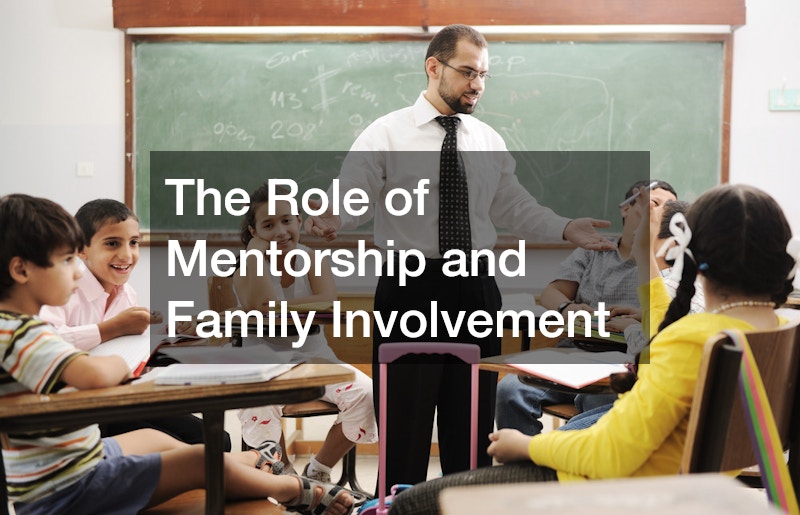
An ideal educational environment extends beyond the walls of any classroom or activity center; it thrives on active collaboration between educators, families, and community mentors. When parents take an active interest in their children’s educational journey, students demonstrate higher academic achievement, better school attendance, and enhanced social skills. Regular communication between teachers and parents creates a unified support system tailored to each student’s unique needs.
Mentorship programs—whether through peer tutoring, athletic coaching, or community partnerships—provide youth with positive role models who offer guidance and encouragement. Having trusted adults to consult helps young people navigate academic pressures, personal challenges, and career decisions. By surrounding students with a supportive network of family, teachers, and community members, we create an environment where every child feels valued, supported, and empowered to achieve their full potential.
An investment in quality education and diverse enrichment experiences is one of the most transformative choices a community can make. From early sensory play and language immersion to rigorous secondary academics, athletic programs, and safe learning facilities, every component of an educational ecosystem contributes to a child’s holistic growth. By cultivating curiosity, character, resilience, and practical skills at every developmental stage, we prepare young individuals not only to succeed academically but also to lead meaningful, impactful lives in an ever-evolving world.
Ultimately, education is a shared journey that relies on the dedication of families, teachers, facility managers, and community leaders working in harmony. When we prioritize accessible, high-quality learning environments and holistic support systems, we invest in the future strength and creativity of our entire society. Empowering children with knowledge, self-belief, and strong values ensures that the next generation is fully prepared to overcome future challenges and build a brighter world.